Context
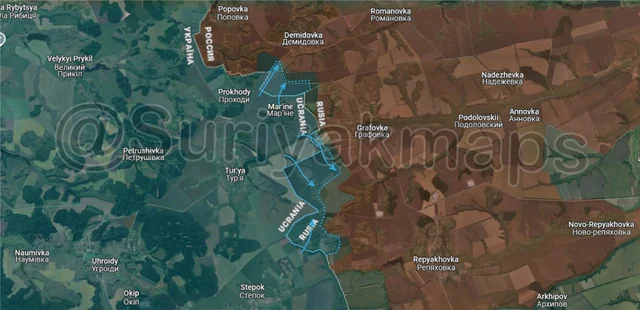
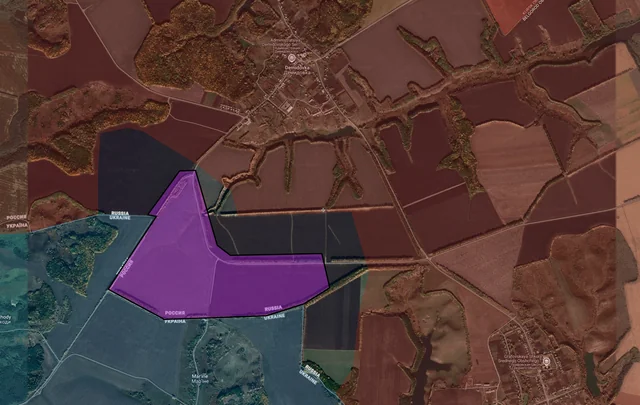
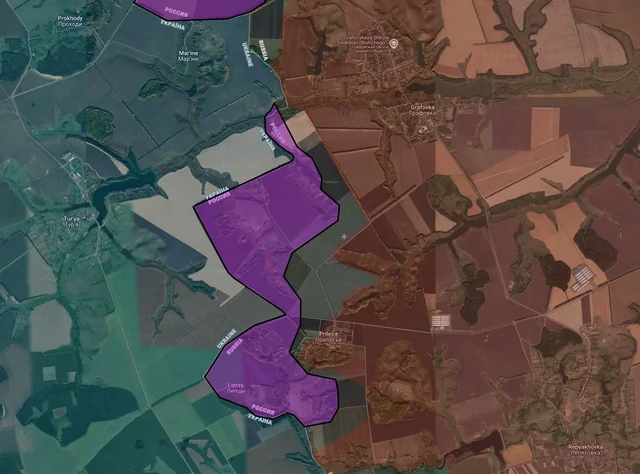
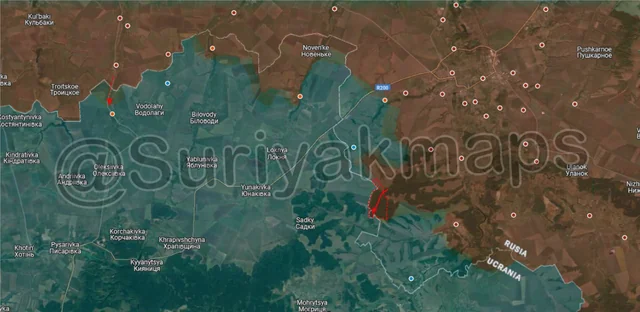
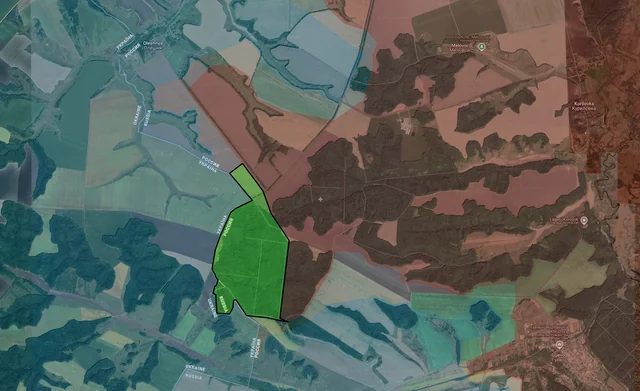
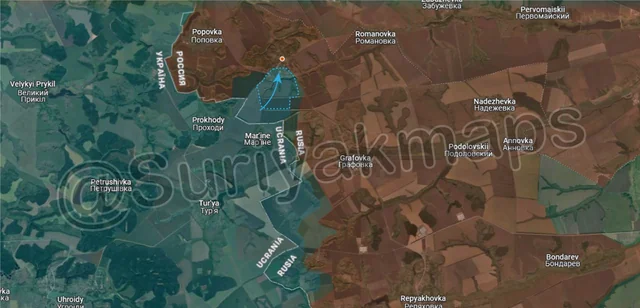
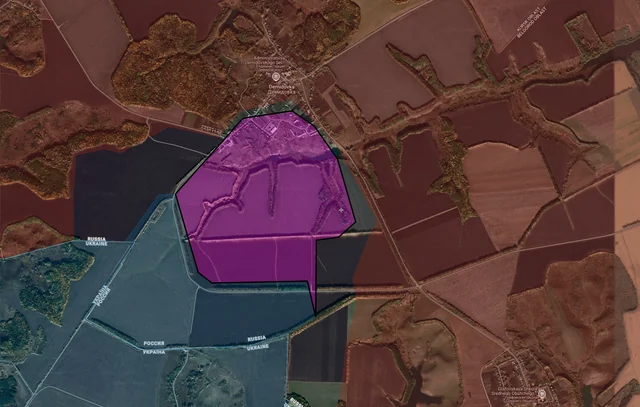
Beginning with the hot topic from the past week, we’re in Belgorod Oblast for the first time since August 2024. Starting on Tuesday 18 March (Day 1119) Ukraine launched a series of attacks into Belgorod, only a few km south of the Kursk-Belgorod Border. These attacks were conducted by large mechanised groups using engineering vehicles, tanks, IFVs, APCs and even some quadbikes/ATVs. These Ukrainian troops came from the units involved in Kursk that had just retreated out of Russia in the two weeks prior to this attack. Their initial push was directed towards the villages of Demidovka, Grafovka and Prilese, which all sit within 1.5km of the border.
Ukraine began its attacks by using engineering vehicles to fill in the ditches in Russia’s border defence line (with dirt), before pushing aside the dragon’s teeth, opening paths for Ukrainian vehicles to move through. They did this in several locations, with Ukrainian assault groups passing through and heading towards the settlements mentioned above.
The attack into Belgorod quickly went south, with the Ukrainian mechanised groups coming under fire immediately from Russian artillery and drones. The Ukrainian force took heavy losses before they could even move a few hundred metres into Belgorod, with ample footage of tanks, IFVs and engineering vehicles being hit by drones (video 1, video 2, video 3, video 4, video 5, video 6, video 7, video 8, video 9, video 10, video 11, video 12, video 13, video 14, video 15, video 16), artillery (video 1, video 2, video 3) and even Russian helicopters (video 1, video 2). Despite the heavy losses Ukraine continues to pour additional forces into the border area of Belgorod, switching to sending more infantry on foot or ATVs, although other heavy vehicles are still used. These smaller infantry groups have had the same luck as the vehicles, getting hit repeatedly by drones and artillery as they try work their way forwards (video 1, video 2, video 3, video 4, video 5, video 6).
Despite 5 days of attacks Ukrainian progress has barely shifted from the initial gains they had on the first day, with their surviving infantry only managing to capture a few treelines and fields south of Demidovka, as well as several fields, treelines and small forest areas west of Grafovka and around Prilese. This is also why Suriyak held off on making a map update until now, as it was unclear when it first began how much progress was actually made and whether they would retreat back over the border.
This Ukrainian attack also exposed some of their long-range equipment, with Russia spotting and destroying several artillery pieces (video 1, video 2, video 3) and even a radar, which Ukraine was using to support their attacking forces. Additionally, Ukrainian AA over the area was deficient, leading to Russia being able to use UCAVs to strike Ukrainian forces (video 1, video 2, video 3, video 4). Ukraine knew these UCAVs were being used in the area as they had taken a number of losses to them in Kursk and Sumy over the past month, but for whatever reason they have been unable to address the AA issue.
As of Saturday Ukrainian positions in Belgorod remain as shown in this map, with their infantry still trying to enter Demidovka, Grafovka, and Prilese. Clashes have been reported by both sides in the areas around these settlements, so we will likely receive further updates within the week. Ukrainian sources have reported that Russia has also been repeatedly striking Krasnopillya (nearest Ukrainian town to this border area) with FABs, with dozens of hits reported daily. Given the intensity of strikes its highly likely that this settlement is the forward base for this border incursion, or at least Russia believes it to be. Given the layout of roads and rivers in eastern Sumy Oblast, Krasnopillya is indeed the best route for Ukrainian forces to bring equipment and supplies from Sumy city to this area.
Now it should be no surprise given the above that my assessment is that this incursion has been a massive failure so far, and should never have been conducted in the first place. Not only did Ukraine grab units that had just messily retreated from Kursk and gave them barely a week of preparation time before launching this attack, but the area they chose for this is so close to Russia’s Kursk grouping that many of its drone operators (specifically recon drones and Lancets) didn’t even have to move positions to respond. This was not a weak area of the border but one close to a large Russian force that Ukraine had just retreated away from, and was heavily surveilled. Judging by how fast and devastating the Russian response was, they either knew about this ahead of time or picked up the equipment movement shortly before it happened. Ukraine has gone from suffering a lot of losses in its messy Kursk retreat to losing even more equipment and manpower in a poorly though out border incursion.
Ukraine has tried border incursions into Belgorod before, with the most recent ones being their several attempts during the first few weeks of Ukraine’s Kursk offensive. Whilst those were much smaller in scale and scope (were mostly a distraction), this incursion failed for the exact same reasons as those ones did; trying to attack a heavily fortified border whilst being surveilled by drones just doesn’t work. The fact Ukraine tried it whilst this close to Russia’s Kursk grouping, and not having adequate AA (which they knew) meaning UCAVs could also be used just points to this being an incredibly poorly planned and rushed incursion.
As for why Ukraine launched this incursion, the primary reason would be to force Russia to keep its Kursk troops in the area. A major concern for Ukrainian command is that with Kursk about to end a lot of Russian units will be freed up to partake in offensive operations in Ukraine, whether that be into Sumy (and we’ve already seen some of this) or on other frontlines. In order to keep the fighting on Russian territory and to provide as much time as possible for their units to reorganise, Ukraine needed to open up another incursion, as it was clear they could not simply force Kursk back open. Whether this reason is worth the sheer amount of manpower and material they are losing is a whole other matter, as its clear they would be better utilised elsewhere in defensive operations than a hastily planned dash at some border villages.
Its important to note that Ukraine can and likely will make progress in Belgorod, by virtue of having so many forces to slam into Russian lines. However like we’ve seen with their other counterattacks in Shevchenko, Pishchane and Toretsk over the past month, whilst you can simply try make gains through sheer mass of forces, unless you can continue the intensity of attacks and keep funnelling troops in, any gains you make will be quickly undone. This will be the key aspect to look out for over the next few weeks.